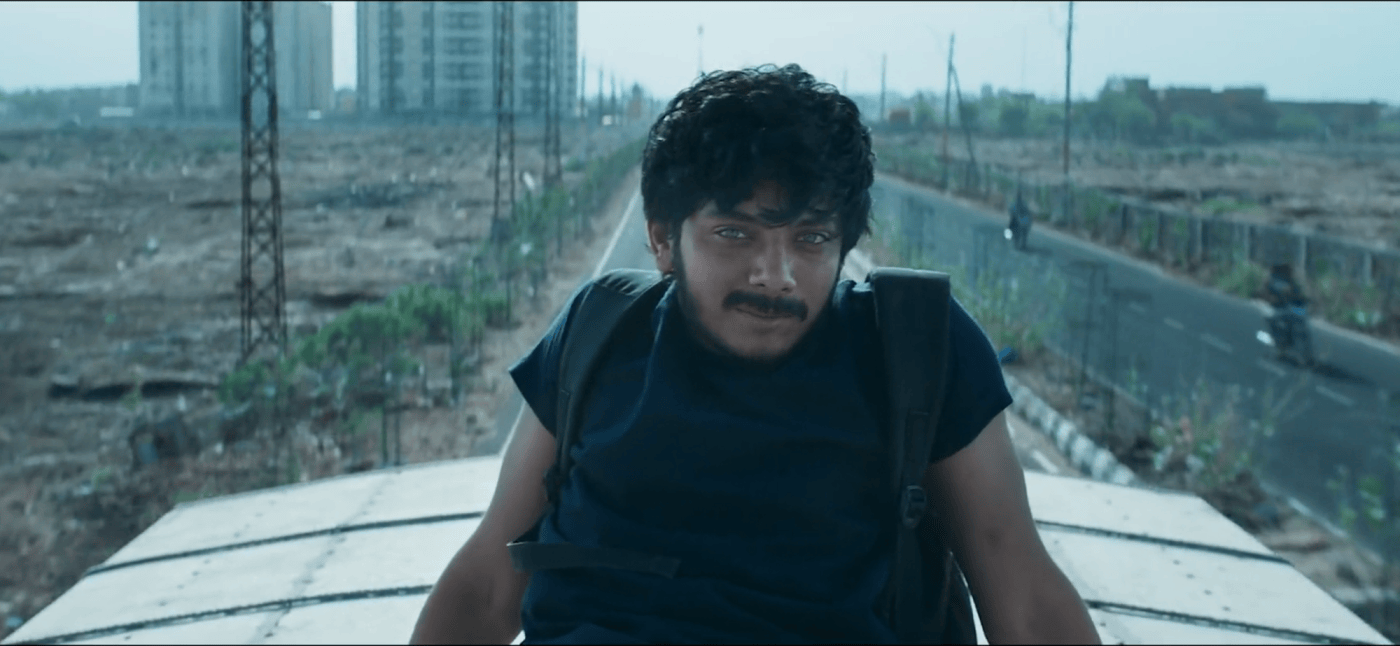
To say Mardaani 2 is a crime thriller is sort of like saying the Mona Lisa is a painting; the statement is true, but grossly undersells the artwork.
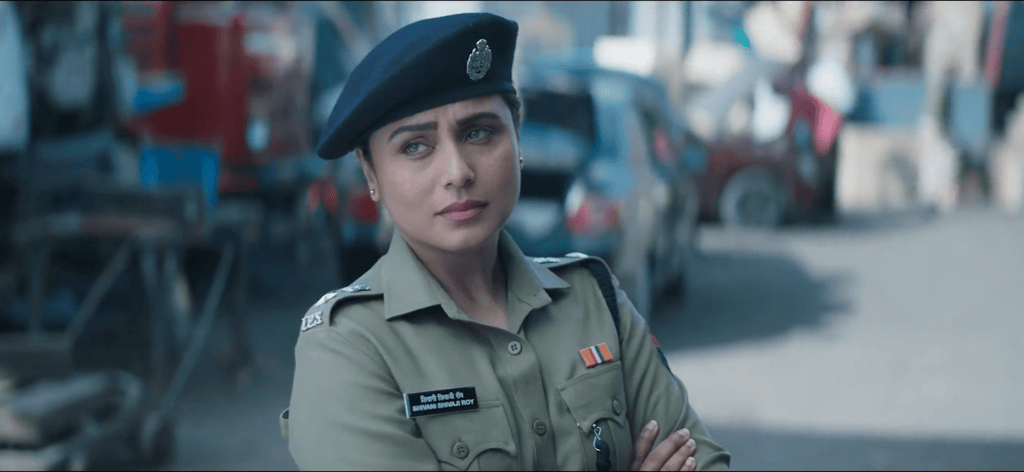
This 2019 Indian box office hit follows Superintendent of Police Shivani Shivaji Roy (Rani Mukerji) as she hunts down Sunny (Vishal Jethwa), the young serial killer and rapist terrorizing the area.
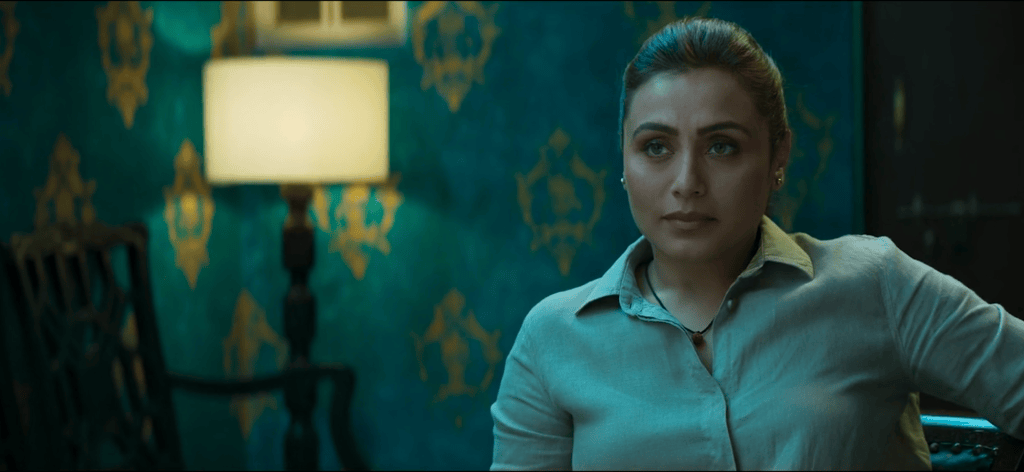
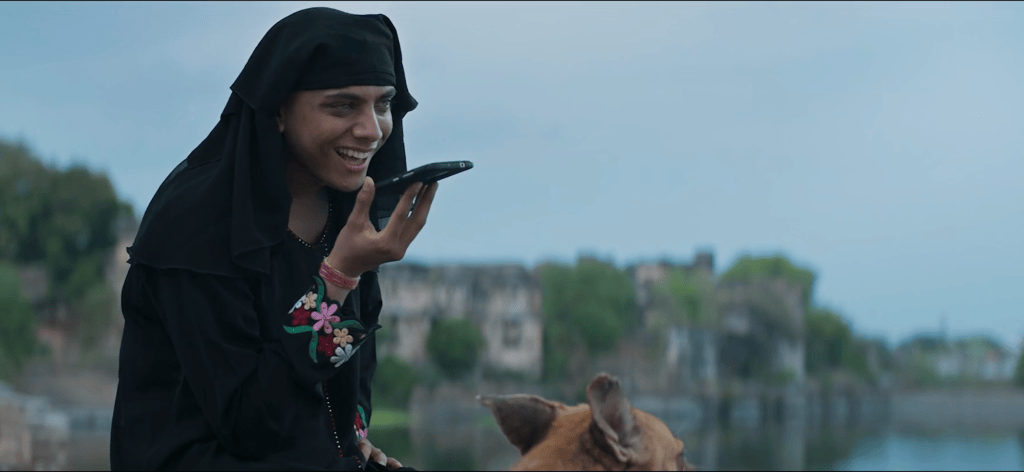
Veteran actress Mukerji stuns as the courageous lead while Jethwa, in his film debut, proves he is already a master of his craft. Mardaani 2 doesn’t hold back as it presents an uncompromising, uncomfortable message about the realness, closeness, and danger of unchecked misogyny and sexism. One way it does this is through its cinematography — more specifically, through a particular creative choice that caught my attention immediately… .
The film begins in a carnival, where we promptly see a man in a mask buying food. When a nearby beggar asks him for some, the masked man gives it to him without hesitation. He then lifts his mask up and begins talking to the camera, breaking the fourth wall for the first (of many) times as we, the viewers, are introduced to Sunny, the utterly depraved antagonist of our story.
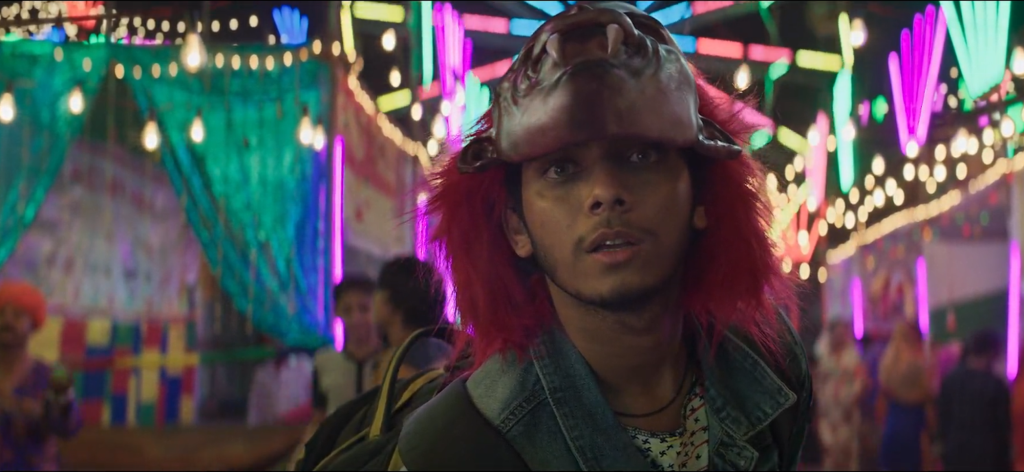
I typically associate fourth wall breaks with narration, so is Sunny a twisted narrator of some sort? Though him addressing us or glancing our way does not inhibit the film’s pace, it doesn’t necessarily propel action either. In fact, Sunny’s fourth wall breaks are asides — they’re done more as cheeky “we both know something that no one else knows,” as the viewers are indeed forced to become privy to things other characters aren’t yet. And when said information we are privy to is that Sunny is going to commit a crime, then we sit in an uncomfortable position: unwilling witnesses to crimes we cannot stop.
We see a prime example of this during the sequence of scenes where Sunny is stalking Shivani and eventually breaks into her home. During these events, he is actually talking to the viewers, recounting an ominous childhood story involving his father and a neighborhood woman. As he finishes, we realize we are in Shivani’s room as Sunny sprawls out comfortably on her bed. It feels wrong (because it is); we aren’t supposed to be here. Yet we were along for the entire invasive process.
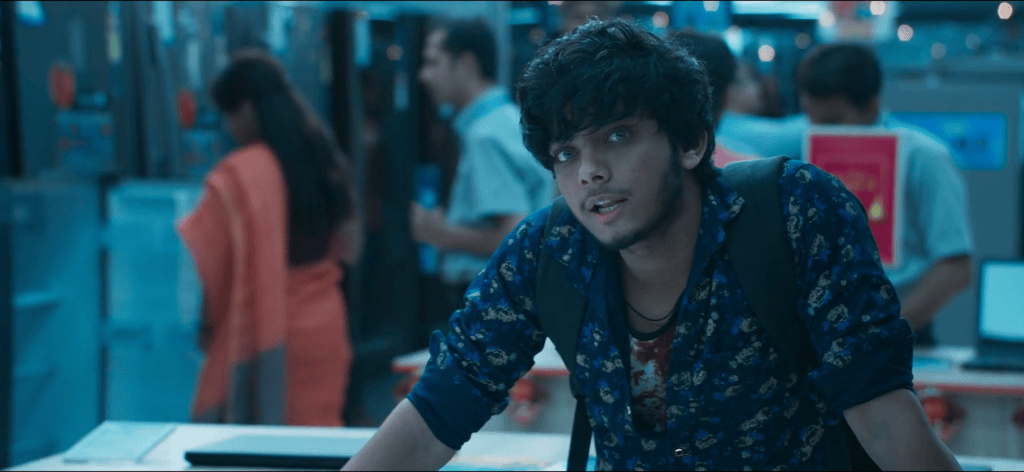
But if Sunny isn’t a narrator, then why the fourth wall breaks?
Though cultures differ as to when eye contact is polite or not, eye contact has a universal purpose: to connect. Whether that’s merely acknowledging a co-worker or staring deeply into the eyes of your beloved, eye contact creates closeness of varying degrees.
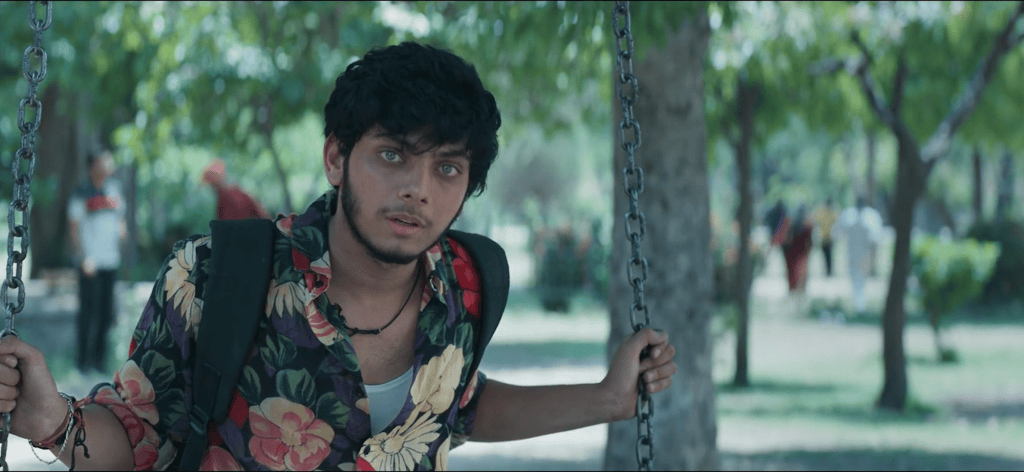
All in all, Sunny breaks the fourth wall over nine times. I say “over nine” because I clumped a few together that happen in rapid succession. That’s a lot of eye contact with a killer and rapist. Each time Sunny shoots us a wink or throws a knowing smile our way, he closes the gap between viewer and character; he weakens the wall of pretense comfortably placed between us at home and those on the other side of the camera lens; he makes us uncomfortable.
Sunny breaking the fourth wall so much shatters the delusion that all of that is so very far removed from us, the viewers.
In an interview discussing the Mardaani franchise, Rani Mukerji herself says it best:
“Mardaani has always stood for making the audience aware of what’s happening in the surrounding. There used to be times during Mardaani 1 where I used to see a lot of women looking at the trailer and seeing — “Oh my god, this is very disturbing, we cannot watch it.” But today, as I sit here with you, the narrative hasn’t shifted. We are still talking about women’s safety; we are still talking about the crimes. And it hasn’t moved in the twelve years. So what do we need to do? We need to feel discomfort. We need to feel uncomfortable. … Because only when we understand and believe that these things are happening around us will we be more aware. That will lead to our safety. We are going to start discussions, conversations regarding these things because justice needs to be done.”
“We need to feel uncomfortable.”
Though she was discussing the franchise as a whole rather than this specific film, it’s easy to see how this vision was shared through Mardaani 2. It’s not comfortable to be brought into the inner circle of a vile criminal enacting unspeakable horrors upon his victims. But perhaps it’s necessary.
Perhaps it’s necessary for us — instead of holding societal injustices at a comfortable arm’s length — to look them straight in the eyes…and allow ourselves to feel uncomfortable.
Perhaps only then will we begin changing things that need to be changed.
I think everyone will have differing opinions on the fourth wall breaks becase it’s an unusual filming choice. I enjoyed the element; it caught my attention and stood out to me from the get-go. However, a review of the film I recently read had the opposite opinion; though the author highly praised Jethwa’s performance, they didn’t like Sunny’s fourth wall breaks and their side of it is an interesting read that also warrants consideration. I’ll link that article here if you’d like to check out an opposing opinion on this particular storytelling technique.
In a film that courageously tackles women’s rights issues in India, I fully acknowledge the irony that my first blog post about it is all about its male antagonist. However, though I recognize the irony, I do not apologize for it. Because Vishal Jethwa deserves all the accolades he received (and continues to receive) for this role.
Happy drama-watching, my friends.
I do not – and will never – use AI in any capacity while writing my blog posts. May the robots never be able to emulate my syntax.


Hi dear,
Thank you for the fascinating article. Just recently— having grown tired of K-dramas after twenty-plus years, during which I feel the quality has deteriorated, or maybe it’s just my curiosity that has faded —I’ve started exploring Indian crime series. I’ve really enjoyed Delhi Crime and other shows on Netflix. It’s a vast world that I decided to explore thorougly. I’ll follow your suggestion.
See you soon and thanks
Maria Luisa
LikeLike
Thank you for your kind comment. I understand wanting to explore outside K-dramas. I have found myself doing the same. Best of luck to you on your drama-searching journey!
LikeLike